August 10, 2026
Invisible Influencers: Faceless Content Creators
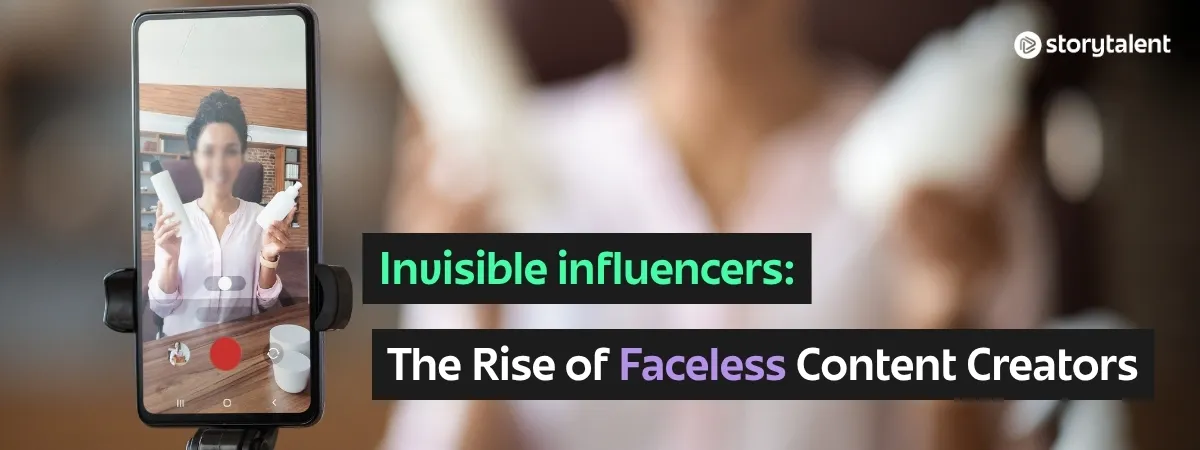
For years, influencer marketing was built around recognizable faces. Today, a growing share of the market is embracing the opposite: creators who never show their faces. Invisible influencers now account for 38% of all newly monetized creator businesses in 2026, up from 12% in 2022. In three years, they went from being a rarity to becoming one of the most important forces in the creator economy.
In this guide, you will learn what invisible influencers are, how they differ from traditional influencers, how they affect brand campaigns, and how to identify and collaborate with them. If you are a creator, you will also see why this model may be your best entry point into the market.
Definition of Invisible Influencers
An invisible influencer is a content creator who produces and publishes material without ever appearing on camera. Instead of relying on their personal image, they build a brand around their niche, the quality of their content, and the value of what they share.
The Concept of Hidden Influencers
The concept of hidden influencers is based on a simple idea: the value lies not in the creator's face, but in the message. These creators use formats such as voiceovers, on-screen text, themed compilations, or product-focused content in which only their hands or surroundings appear. Their identity remains anonymous, but their influence is real and measurable.
This phenomenon reflects a profound generational shift. Seventy-two percent of Gen Z viewers say they care more about content quality than creator visibility. For younger audiences, what matters is what is being said, not who is saying it.
Differences Between Invisible and Traditional Influencers
The central difference lies in where the value resides. A traditional influencer builds a personal brand: their face, lifestyle, and personality are the product. An invisible influencer builds a content brand: the niche, subject-matter authority, and content library are what attract the audience.
This distinction has practical consequences. While a traditional influencer depends on constant personal exposure, a hidden creator can scale their operation, delegate production, and even transfer the project without making it dependent on a single person. The content—not the face—is the asset.
Characteristics of Anonymous Influencers
Anonymous influencers share a set of traits that distinguish them from conventional creators and explain why their model works so well in 2026.
Profile and Lifestyle
Unlike traditional influencers, who expose their personal lives as part of their value proposition, silent influencers protect their privacy. Many choose this path specifically to avoid overexposure, on-camera anxiety, or personal-brand burnout. Their profile is defined by specialization in a niche, not by their daily life.
This anonymity does not make them less relatable. In fact, 86% of consumers perceive faceless content as more authentic because it focuses on the message rather than the personality of the person delivering it. When viewers do not see the creator, they judge the content on its merits.
Content Strategies They Use
Anonymous influencers master specific formats that do not require showing their faces. Common examples include hands demonstrating a product in use, B-roll with overlaid text presenting a problem and its solution, voiceover narration over product footage, and compilations or educational content featuring graphics and narration.
Consistency and clarity are their greatest strengths. Educational content accounts for 38% of the highest-paid faceless creators, while ASMR-style or satisfying content captures 27% of the market. Narrative structure and script quality matter more than anything else.
The Impact of Silent Influencers on Marketing
The rise of silent influencers is not merely an aesthetic change; it is transforming how brands plan their campaigns.
Benefits of Using Invisible Influencers in Campaigns
For brands, collaborating with faceless creators offers concrete advantages. Companies report 27% higher ROI when working with anonymous creators in niches such as finance, motivation, and technology, due to perceived authority and reduced personal bias
In addition, faceless content fits perfectly with performance marketing needs. It is product-centered material that is easy to scale across ads and campaigns while still feeling native and authentic. Many ecommerce and D2C brands already run complete campaigns using invisible creators for ads, landing-page creative, and social proof. The relevance of user-generated content adds another advantage: 92% of consumers trust UGC more than brand messaging, and ads based on this type of content generate up to four times more clicks
Success Stories
The model has already proven profitable. Some invisible influencer accounts earn an average of up to $45,000 per month on platforms such as TikTok and YouTube, and certain niche pages generate more than $1 million per year without ever revealing the identity of the person behind them. Faceless formats, such as voiceover storytelling or text-based content, generate higher completion rates because audiences focus entirely on the value of the content.
How to Identify an Invisible Influencer
For brands looking to add this type of creator to their campaigns, knowing how to identify them is the first step.
Search Tools and Methods
Invisible influencers are found primarily on TikTok, YouTube, and Instagram, where algorithms reward content for its ability to retain viewers rather than for the creator's identity. Specialized platforms that connect brands and creators are the most efficient way to find them because they allow users to filter by niche, format, and performance metrics without requiring the creator to have a recognizable public face.
Storytalent, for example, connects brands with more than 9,000 registered creators across LATAM and the United States, including faceless content creators who specialize in UGC and product content. Search filters based on category and metrics make it easier to find exactly the profile a campaign needs.
Signs of Authenticity and Commitment
When evaluating a hidden influencer, the key signals are not follower counts, but content quality and engagement. A faceless creator with a high video completion rate, genuine comments, and a clearly defined niche is often more valuable than an account with many followers but low interaction. Publishing consistency and thematic coherence are also reliable indicators of professional commitment.
Strategies for Collaborating With Invisible Influencers
Once the right creator has been identified, the collaboration requires an approach tailored to this model.
Types of Effective Collaborations
The most effective collaborations with invisible influencers are usually product-oriented. Faceless UGC for ads is the most common: the creator produces videos showing the product in use, which the brand then uses in paid campaigns. Voiceover reviews, tutorials with on-screen text, and sponsored educational content in high-purchase-intent niches also perform well.
Key Considerations
When collaborating with anonymous creators, it is important to be clear about content usage rights, especially when the material will be used in paid advertising. Transparency around rates and delivery timelines is essential, and using a platform that manages negotiations and payments securely reduces friction for both parties. The key is to treat the creator as a professional partner, not simply as a vendor.
Future Trends in Invisible Influencers
The invisible influencer phenomenon is only beginning to reveal its potential.
The Evolution of Influencer Marketing
The first wave of the creator economy was built on personal brands. The second is being built on content brands, where value resides in the niche and in quality, not in a person's exposure. This evolution makes creator businesses more scalable, more transferable, and more resilient. Influencer marketing is shifting from the logic of fame to the logic of value.
Predictions for the Role of Hidden Influencers
All signs indicate that the role of hidden influencers will continue to grow. With the global creator population projected to exceed 1.1 billion by 2032, and production tools becoming increasingly accessible, faceless content will become a major entry point into the market. For brands, this means an increasingly broad catalog of specialized creators. For content creators, it means that it has never been easier to get started without exposing themselves.
If you are a creator looking to monetize your content without showing your face, or if you represent a brand seeking creators for its campaigns, sign up for Storytalent and become part of the ecosystem connecting talent and brands across LATAM and the USA.
FAQs
What Are Invisible Influencers?
They are content creators who produce and publish material without showing their faces. They build a brand based on their niche and content quality, not on their personal identity.
How Can Hidden Influencers Benefit a Brand?
They provide authentic, product-centered content that is easy to scale in advertising. Brands report up to 27% higher ROI when collaborating with anonymous creators in high-intent niches.
On Which Platforms Can Anonymous Influencers Be Found?
They are found primarily on TikTok, YouTube, and Instagram. For brand collaborations, platforms such as Storytalent connect more than 9,000 creators across LATAM and the USA, including faceless creators.
What Type of Content Do Silent Influencers Create?
Voiceovers, on-screen text, compilations, educational content, and product UGC in which only the creator's hands or surroundings are visible, without showing their face.
Is Working With Invisible Influencers More Effective Than Working With Celebrities?
It depends on the objective, but for conversion campaigns, faceless content often performs better: 86% of consumers perceive it as more authentic because it focuses on the message rather than on fame.
Disponible en otros idiomas:
Leer en Español