September 11, 2026
How to Choose a Fashion UGC Creator That Converts
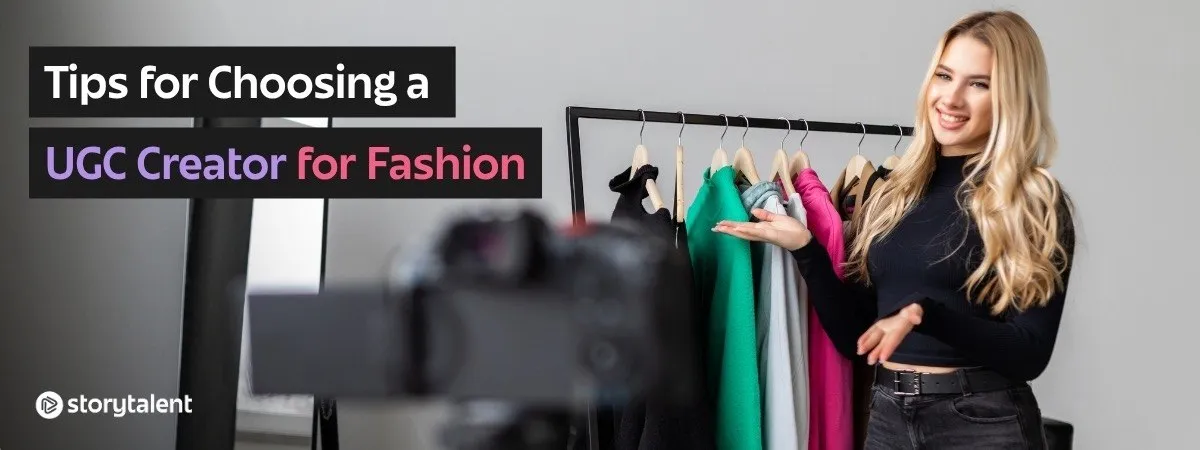
Creator-generated content has become the most powerful tool for clothing and accessory brands that want to sell more and truly connect with their audience.
Fashion sites that add UGC to their product pages see a 20% increase in conversion rates, and 92% of consumers trust user content more than traditional advertising. But there's a nuance many brands overlook: the outcome depends almost entirely on choosing the right creator.
In this guide, you'll find the key criteria for selecting a fashion UGC creator who truly converts — and the mistakes to avoid in the process.
Why UGC is so effective in fashion
Before choosing, it helps to understand why UGC works better in fashion than in almost any other category. Fashion sells identity, not just product, and that completely changes what the buyer needs to see before deciding.
When a creator films themselves putting together an outfit for a real occasion — in their own room, with their own body — a viewer in a similar situation keeps watching. That authentic context creates a connection a studio shoot can't replicate. UGC directly answers the question the buyer asks before paying: "will this look good on someone like me?"
The commercial impact is measurable. UGC on TikTok outperforms brand content by 22%, and ads that include UGC get up to 4 times more clicks than traditional ads. For a fashion brand, choosing the right creator isn't an aesthetic detail — it's the difference between an ad that converts and one that gets lost in the scroll.
Tips for choosing a fashion UGC creator
These are the criteria to evaluate before hiring a creator for your fashion brand.
1. Prioritize niche fit, not follower count
The most common mistake is choosing by audience size. In UGC, the creator doesn't need many followers, because their content is used on your channels and ads, not theirs. What matters is that their style, aesthetic, and type of content fit your brand. A creator who specializes in sustainable fashion will sell your eco pieces better than a generic celebrity with millions of followers.
2. Evaluate the quality and authenticity of their content
Review their portfolio with a critical eye. Do their videos feel real, or do they look like just another ad? UGC's value lies in its authenticity: genuine, human content scores 81 out of 100 on authenticity, versus 63 for AI-generated content. Look for creators who know how to show the garment in a real context, with natural light and without overproduction.
3. Verify that they represent your target customer
In fashion, representation sells. A British clothing brand added real customer photos of different sizes and body types to its product pages and saw a 19% increase in conversion. Choose creators whose body, age, lifestyle, and aesthetic match those of your ideal buyer. The viewer needs to be able to picture themselves in the garment.
4. Look at their ability to create a good hook
In fashion, the problem isn't conversion — it's the start of the video. Most clothing ads look the same, and viewers recognize them and swipe before getting hooked. A good fashion UGC creator knows how to open with curiosity or visual tension in the first few seconds. When reviewing their content, notice how their videos begin, because that's where half the result is won.
5. Consider the format that works best for your goal
Not all UGC formats serve the same purpose. The try-on haul works to show fit and drape, the "get ready with me" connects with specific occasions, and first-person reviews resolve doubts about sizing and quality. Choose creators who master the format aligned with your campaign goal.
Mistakes to avoid when choosing a fashion UGC creator
Beyond the criteria above, watch out for these common traps that can ruin even the best talent selection.
Over-scripting the content
UGC works precisely because it feels spontaneous — like a friend's recommendation, not a commercial. If you hand the creator a rigid word-for-word script, you kill the naturalness that makes it effective. The result ends up looking like a traditional ad, which is exactly what viewers learn to ignore. The ideal is to find the balance: give them a clear brief with the campaign goal, the must-have messages, and the brand guidelines, but let the creator execute it in their own voice and style. Nobody knows their audience better than they do.
Choosing on price rather than fit
The cheapest creator is rarely the most profitable. Hiring on rate alone usually leads to content that doesn't connect with your audience and therefore doesn't sell, so the initial savings are lost in poor results. In UGC, what really matters is fit, because a creator whose aesthetic, body, and lifestyle match your ideal buyer's generates a return that more than makes up for the investment. Think about cost per conversion, not cost per video. A slightly more expensive creator who converts twice as well will always be the better decision.
Ignoring usage rights
This is one of the most costly and most common mistakes. If you plan to use the content in paid ads on Meta or TikTok, or to repurpose it on your own channels, you need to negotiate usage rights from the very start. Many brands close a collaboration thinking only about organic content and later discover they can't run that video as an ad without renegotiating. Make it clear from the initial brief where the content will be used, for how long, and in what formats. Usage rights usually add a percentage to the base rate, but they save you from legal issues and awkward renegotiations down the line.
Betting everything on a single creator
Concentrating your entire investment in one creator is betting blind, because you never know for sure what content will convert until you test it. The smartest move is to start with several creators of different profiles, measure which ones deliver the best results, and scale those collaborations. Each creator brings a different creative angle, reaches a slightly different segment of your audience, and gives you more data to optimize your campaigns. Working with a group of creators also reduces risk, because if one doesn't perform as expected, you have others that do.
Where to find fashion UGC creators
Finding creators is easy. Finding creators with real audiences, quality content, and affinity with your brand takes more work. Searching manually by hashtags or checking who already mentions your brand works, but it's slow and hard to scale.
A specialized platform solves that problem. StoryTalent connects fashion brands with more than 9,000 creators across LATAM and the United States, with the ability to filter by niche, aesthetic, audience, and performance metrics. Instead of tracking profiles one by one, you get access to a base of verified creators, negotiate terms transparently, and manage the collaboration from start to finish in one place.
If your fashion brand wants authentic content that answers the question that really matters to your customers, explore the creators available on StoryTalent and find the talent that connects with your audience.
FAQs
What is fashion UGC?
It's content (photos and videos) created by real people showing clothing and accessories in authentic contexts. Brands use it on their product pages, social media, and ads because it builds more trust and conversion than studio content.
How many followers should a fashion UGC creator have?
The follower count doesn't matter. In UGC, the content is used on the brand's channels, not the creator's. What's relevant is the quality of the content and its affinity with your audience.
Why does UGC convert more in fashion?
Because it answers the buyer's key question: "will this look good on me?" Content from real creators, with real bodies and real contexts, lets the viewer project themselves into the garment.
Where do I find fashion UGC creators?
On specialized platforms like StoryTalent, which connect brands with thousands of creators across LATAM and the US, with filters by niche, aesthetic, and performance metrics.
Disponible en otros idiomas:
Leer en Español